Energy Storage Technology
What Is Energy Storage Technology? A System-Level Engineering Perspective
Introduction: Beyond Basic Definitions
Energy storage technology is often described in simple terms as the ability to store energy for later use.
However, from an engineering perspective, energy storage is far more complex — it is a multi-disciplinary system involving electrochemistry, power electronics, control algorithms, and thermal dynamics.
Understanding energy storage requires looking beyond definitions and into how systems are designed, optimized, and controlled in real-world applications.
The Core Principle: Energy Conversion and Time Decoupling
At its most fundamental level, energy storage solves one problem:
Decoupling energy generation from energy consumption over time
This is achieved through a continuous process of:
- Energy conversion (AC ↔ DC)
- Energy storage (chemical, mechanical, etc.)
- Energy release (controlled discharge)
But in real systems, the challenge lies in managing:
- Efficiency losses
- Dynamic load variations
- System stability
- Long-term degradation
System-Level Architecture of Energy Storage
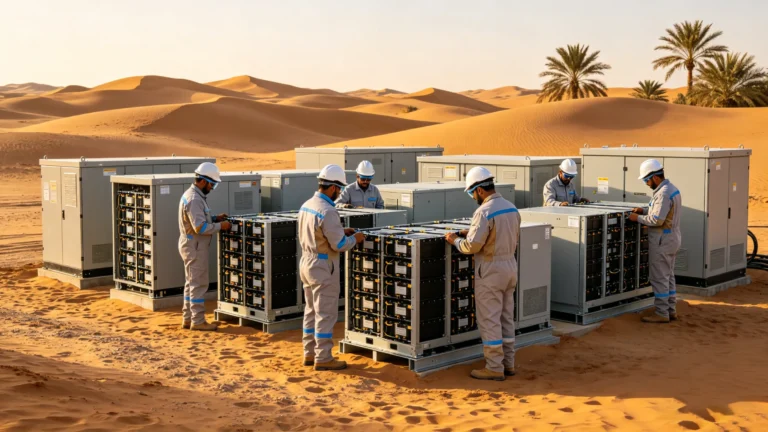
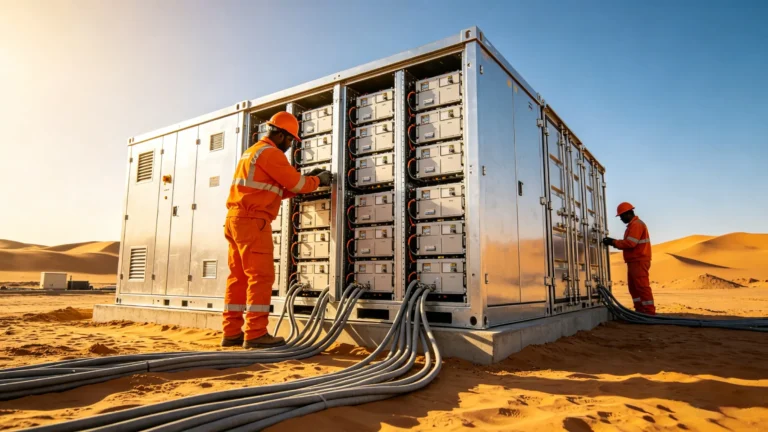
Unlike simplified models, real energy storage systems are composed of multiple tightly integrated subsystems:
1. Energy Storage Medium (Battery Layer)
This is where energy is physically stored.
Engineering focus:
- Energy density vs safety trade-offs
- Cycle life and degradation behavior
- Charge/discharge characteristics
2. Power Conversion Layer (PCS)
The PCS is responsible for converting energy between grid and storage.
Engineering challenges:
- Conversion efficiency
- Grid synchronization
- Harmonic control and power quality
3. Control Layer (EMS + BMS)
This is the intelligence of the system.
- BMS manages battery safety and performance
- EMS optimizes system-level operation
Engineering focus:
- Real-time data processing
- Control algorithms
- Optimization strategies
4. Thermal & Safety Layer
Often underestimated, but critical in real systems.
Engineering challenges:
- Heat generation under high load
- Thermal gradients between cells
- Risk of thermal runaway
Key Engineering Challenges in Energy Storage
1. Efficiency vs Stability Trade-Off
Maximizing efficiency often conflicts with system stability.
High-efficiency operation may introduce risks under dynamic load conditions.
2. Battery Degradation Modeling
Battery performance changes over time due to:
- Temperature
- Charge cycles
- Depth of discharge
Accurate modeling is essential for long-term system reliability.
3. Dynamic Load Management
In real applications, loads are not constant:
- Industrial loads fluctuate rapidly
- EV charging creates sudden spikes
- Renewable energy introduces variability
This requires real-time system response.
4. Grid Interaction Complexity
Modern grids are no longer stable:
- Renewable penetration increases volatility
- Weak grids require adaptive control
- Grid-forming capabilities become essential
Advanced Technologies Driving Modern Energy Storage
AI-Driven Energy Optimization
Modern systems increasingly use algorithms to:
- Predict energy demand
- Optimize charge/discharge cycles
- Improve economic performance
Grid-Forming Inverters
Unlike traditional systems, grid-forming technology allows storage systems to:
- Actively regulate grid conditions
- Support weak or unstable grids
- Enable microgrid operation
Modular System Design
Scalability is achieved through modular architecture:
- Easier deployment
- Flexible expansion
- Reduced system complexity
Hybrid Energy Systems
Energy storage is no longer standalone:
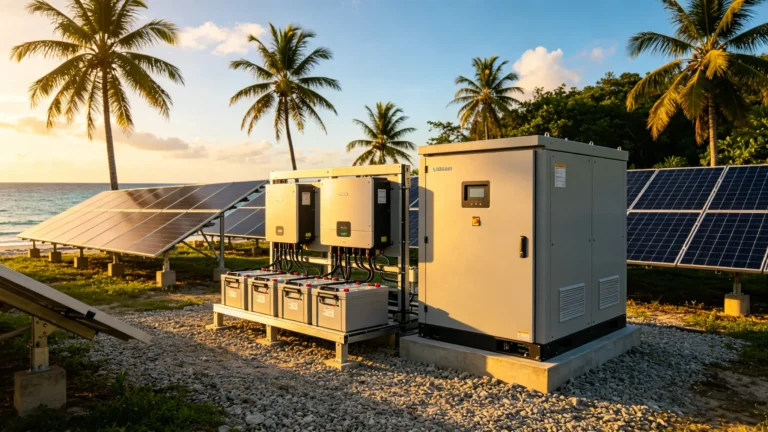
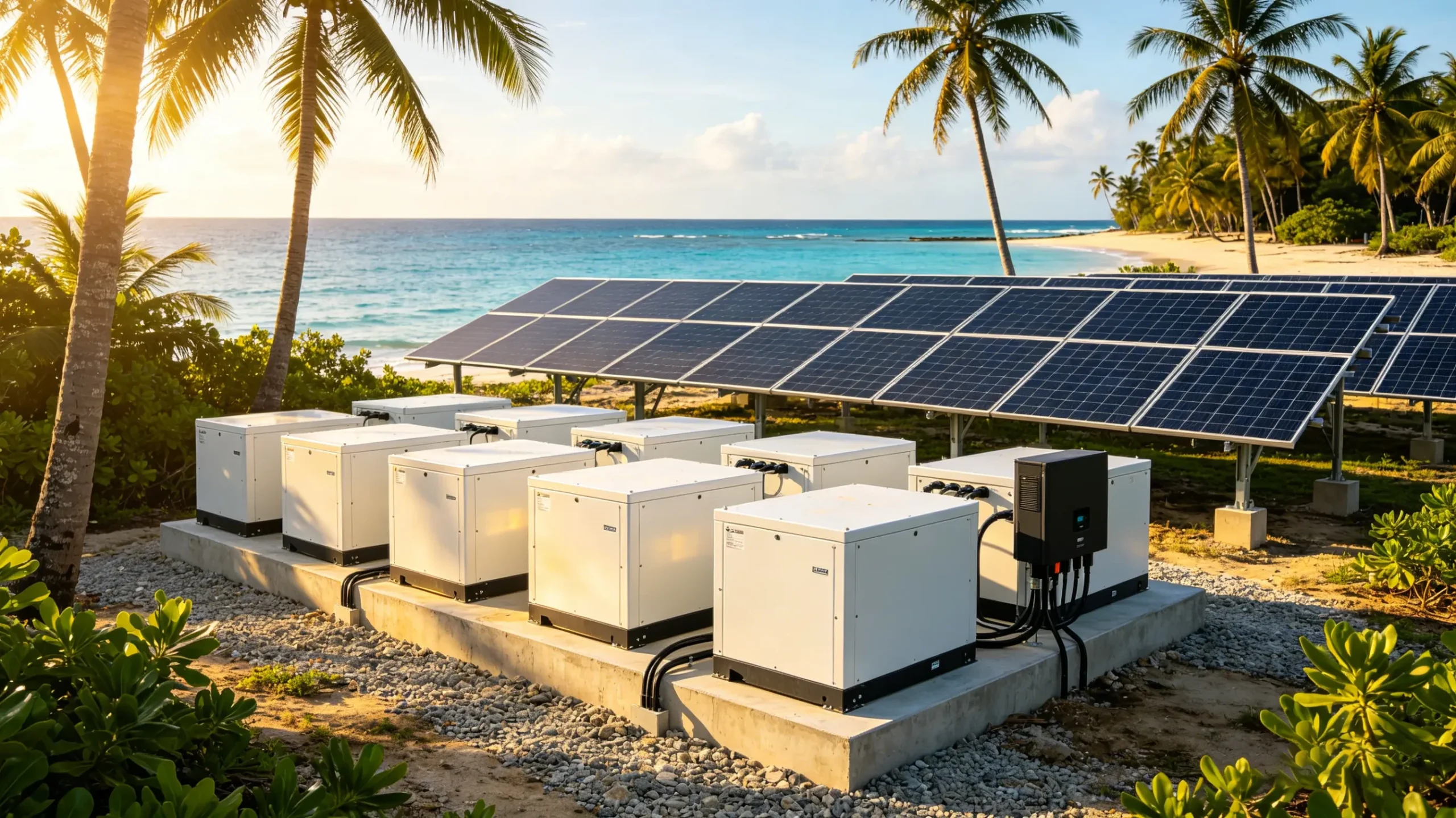
- Solar + Storage
- Storage + EV charging
- Storage + diesel hybrid systems
Why Energy Storage Is a System Engineering Problem
Energy storage is often misunderstood as a battery problem.
In reality, it is a system engineering challenge, where success depends on how well multiple components are integrated and optimized together.
Key takeaway:
Performance is not determined by a single component, but by system-level coordination
Real-World Application Complexity
In practical deployment, engineers must consider:
- Site conditions (temperature, environment)
- Load profiles (industrial vs commercial)
- Grid characteristics
- Economic objectives (ROI, tariff structures)
Each project requires a customized engineering approach.
Future Direction of Energy Storage Technology
The next generation of energy storage systems will focus on:
- Higher system intelligence (AI + predictive control)
- Improved safety and thermal management
- Deeper integration with grid infrastructure
- Increased scalability for large deployments
Energy storage is evolving from passive systems into active, intelligent energy assets.
Energy storage technology is not just about storing energy —
it is about controlling energy in time, optimizing its use, and integrating it into complex systems.
From an engineering perspective, the future of energy storage lies in:
- System-level optimization
- Intelligent control
- Scalable architecture
FAQ
What is energy storage technology?
It refers to systems that store energy for later use, typically using batteries or other storage methods.
What is the most common energy storage system?
Battery Energy Storage Systems (BESS), especially lithium-ion-based systems.
Why is energy storage important?
It enables renewable energy integration, improves grid stability, and optimizes energy usage.
What are the main components of an energy storage system?
Battery, PCS (power conversion), EMS/BMS (control), and thermal/safety systems.
What is the biggest challenge in energy storage?
Balancing efficiency, safety, cost, and long-term reliability.