Energy Storage Applications
How Different Use Cases Drive System Design
Introduction: One Technology, Many Different Applications
Energy storage is often discussed as a single technology.
In reality, its applications vary significantly depending on the use case — each requiring different system architectures, control strategies, and engineering priorities.
There is no “one-size-fits-all” energy storage system.
Understanding how energy storage is applied across different scenarios is essential for proper system design and deployment.
Why Application Matters in Energy Storage Design
The performance of an energy storage system is not defined solely by hardware —
it is shaped by how the system is used.
Different applications impose different requirements:
- Power vs energy capacity
- Response time
- Cycling frequency
- Economic objectives
The same battery technology behaves differently under different use cases.
Major Energy Storage Application Categories
1. Commercial & Industrial (C&I) Applications
Primary Objective
Cost reduction and energy optimization
Typical Functions
- Peak shaving
- Time-of-use optimization
- Backup power
Engineering Focus
- Economic optimization algorithms
- Load profile analysis
- Moderate cycling frequency
Key Insight:
System design is driven by electricity pricing structure.
2. Utility-Scale Applications
Primary Objective
Grid stability and energy dispatch
Typical Functions
- Frequency regulation
- Load balancing
- Renewable integration
Engineering Focus
- High power output
- Fast response time
- Grid interaction capability
Key Insight:
System performance depends on control strategy and grid behavior.
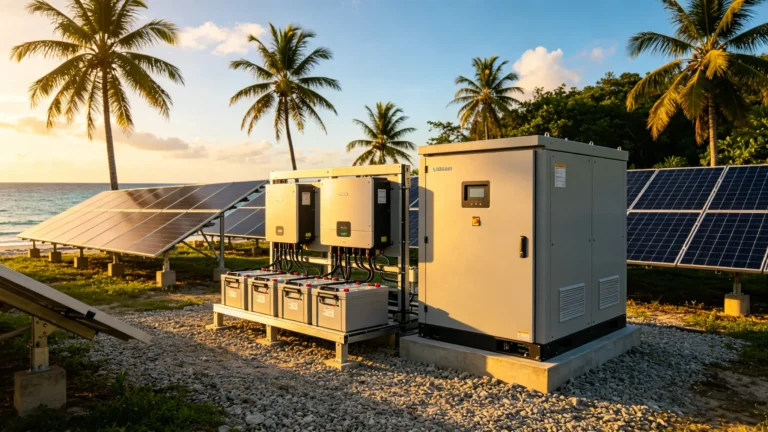
3. Solar + Energy Storage Applications
Primary Objective
Maximize renewable energy utilization
Typical Functions
- Energy shifting
- Curtailment reduction
- Output smoothing
Engineering Focus
- Solar generation variability
- Storage sizing optimization
- EMS scheduling strategies
Key Insight:
System design must align with solar generation patterns.
4. Industrial Applications
Primary Objective
Power stability and production reliability
Typical Functions
- Voltage stabilization
- Load balancing
- Backup power
Engineering Focus
- High-load operation
- Power quality control
- System robustness
Key Insight:
Reliability is more critical than efficiency.
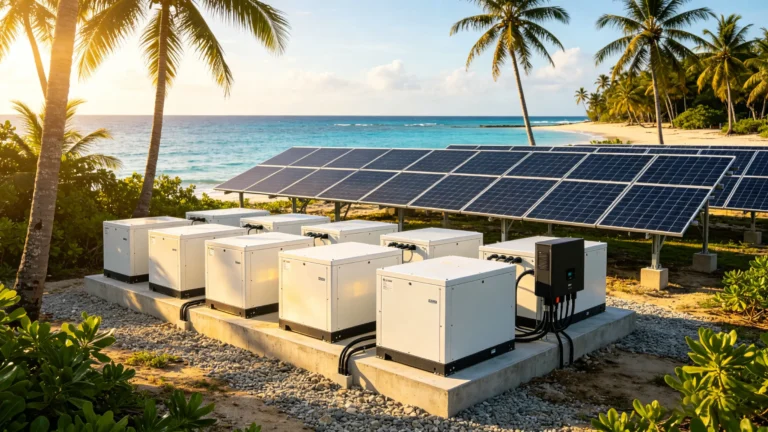
5. Microgrid and Off-Grid Applications
Primary Objective
Energy independence
Typical Functions
- Hybrid energy coordination
- Diesel reduction
- Autonomous operation
Engineering Focus
- Multi-energy integration
- System autonomy
- Stability under variable conditions
Key Insight:
System must operate without external grid support.
6. EV Charging Infrastructure
Primary Objective
Manage high peak power demand
Typical Functions
- Peak load buffering
- Charging optimization
- Grid load reduction
Engineering Focus
- High power density
- Fast response
- Charging pattern prediction
Key Insight:
Load spikes define system design.
Key Differences Across Applications
| Application | Priority | System Design Focus |
| Commercial | Cost | Optimization algorithms |
| Utility | Stability | Fast response + grid control |
| Solar + Storage | Efficiency | Energy shifting |
| Industrial | Reliability | Power quality |
| Microgrid | Independence | Hybrid integration |
| EV Charging | Peak power | Load buffering |
Engineering Implications
Different applications require different design strategies:
1. Sizing Strategy
- Energy capacity vs power capacity varies
2. Control Algorithms
- EMS strategies differ significantly
3. Battery Usage Patterns
- Cycling frequency varies widely
4. Economic Models
- ROI calculation differs by application
Common Design Mistakes
❌ Applying the same system design to different scenarios
❌ Ignoring load profile variations
❌ Oversizing or undersizing storage capacity
❌ Neglecting control strategy optimization
These mistakes lead to poor system performance and reduced ROI.
Future Trends in Energy Storage Applications
Application-Specific Optimization
Systems tailored to specific use cases.
AI-Based Control Systems
Dynamic optimization based on real-time data.
Integration Across Energy Systems
Storage combined with solar, EV, and microgrids.
Standardization + Customization Balance
Modular systems with flexible deployment.
Energy storage is not defined by technology alone —
it is defined by application.
The success of a system depends on how well it is designed for its specific use case.
Understanding application-driven design is the key to building efficient, reliable, and economically viable energy storage systems.
FAQ
What are the main applications of energy storage?
Commercial, industrial, utility-scale, solar, microgrid, and EV charging.
Why does application matter in energy storage?
Different use cases require different system designs and control strategies.
What is the most common energy storage application?
Commercial and industrial energy optimization is one of the most widely used.
Is one energy storage system suitable for all applications?
No, systems must be customized based on application needs.
Which application has the highest ROI?
Typically commercial and industrial applications due to electricity cost savings.