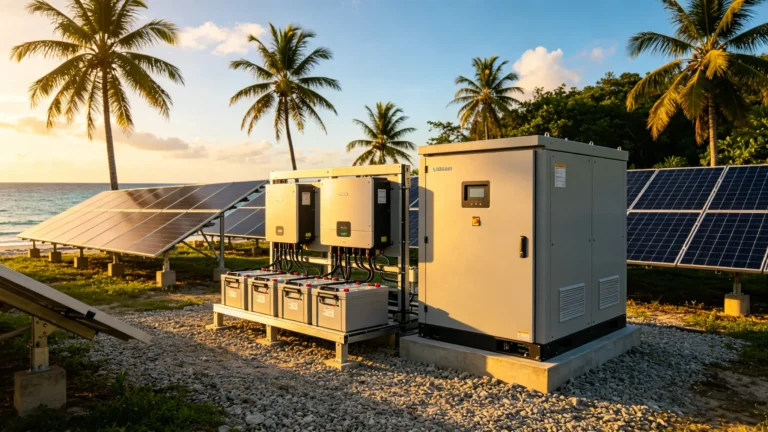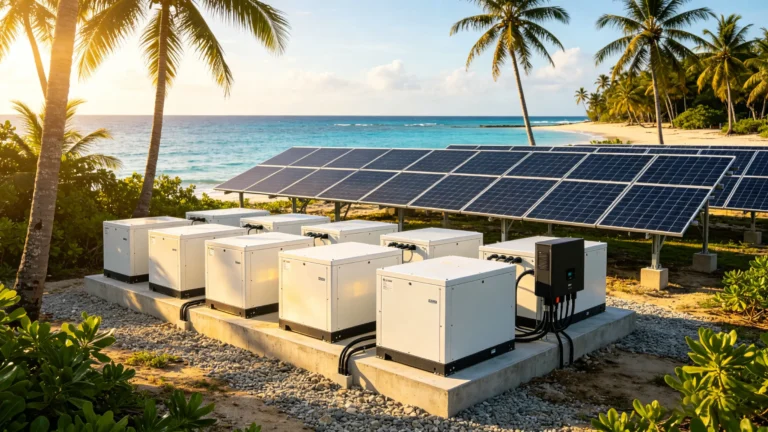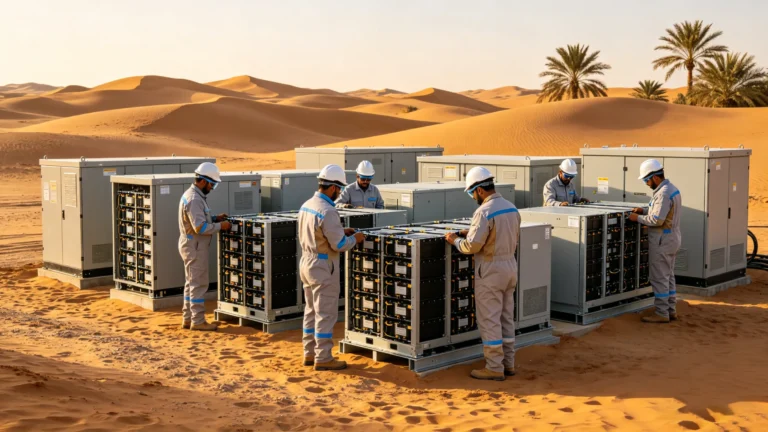
Battery Energy Storage Systems
Battery Energy Storage Systems (BESS): Architecture, Design, and Engineering Challenges
Introduction: Why BESS Is More Than Just Batteries
Battery Energy Storage Systems (BESS) are often simplified as “battery packs connected to the grid.”
In reality, a BESS is a highly engineered system that integrates electrochemistry, power electronics, real-time control, and safety mechanisms into a unified architecture.
Understanding BESS requires looking beyond the battery itself —
and focusing on how the entire system operates as a coordinated energy platform.
What Is a Battery Energy Storage System (BESS)?
A Battery Energy Storage System (BESS) is a system designed to store electrical energy in batteries and release it when needed.
However, from an engineering perspective, a BESS includes multiple layers:
- Energy storage layer (battery cells and modules)
- Power conversion layer (PCS)
- Control layer (BMS and EMS)
- Thermal and safety systems
The battery is only one part — the system defines performance.
BESS System Architecture (Engineering Breakdown)
1. Battery Pack Layer
This is where energy is physically stored.
Engineering considerations:
- Cell chemistry selection (LFP vs NMC)
- Energy density vs safety trade-offs
- Cycle life and degradation
2. Battery Management System (BMS)
The BMS ensures safe and efficient battery operation.
Key functions:
- Voltage, current, and temperature monitoring
- Cell balancing
- State of charge (SOC) estimation
- Safety protection
Without BMS, battery systems are unstable and unsafe.
3. Power Conversion System (PCS)
The PCS converts energy between DC (battery) and AC (grid/load).
Engineering challenges:
- Conversion efficiency
- Harmonic distortion
- Grid synchronization
- Dynamic response speed
4. Energy Management System (EMS)
The EMS acts as the “brain” of the system.
Key roles:
- Optimize charge/discharge cycles
- Manage load demand
- Implement economic strategies (TOU, peak shaving)
5. Thermal & Safety Systems
Thermal control and safety protection are critical for system reliability.
Engineering focus:
- Heat dissipation
- Thermal uniformity
- Fault detection and isolation
How BESS Works in Real Applications
In real-world systems, BESS operates dynamically:
- Energy Charging Phase
- Energy is stored during low demand or excess generation
- Energy Storage Phase
- System maintains stable battery conditions
- Energy Discharge Phase
- Energy is released based on demand or pricing
- Control Optimization
- EMS continuously adjusts operation
The system operates continuously, not in isolated steps.
Key Engineering Challenges in BESS Design
1. Battery Degradation
Battery performance decreases over time due to:
- Temperature
- Depth of discharge
- Charge cycles
Accurate modeling is critical.
2. Thermal Management
Heat generation is inevitable.
Challenges include:
- Uneven temperature distribution
- Cooling efficiency
- Thermal runaway risks
3. System Integration
BESS is not plug-and-play.
Challenges:
- Coordination between PCS, BMS, EMS
- Load variability
- Grid interaction
4. Safety Engineering
Safety must be built into every layer:
- Electrical protection
- Thermal protection
- System-level fail-safe design
Types of BESS Applications
Commercial & Industrial (C&I)
- Peak shaving
- Energy cost optimization
Utility-Scale Systems
- Grid stabilization
- Renewable integration
Microgrids
- Off-grid or hybrid energy systems
EV Charging Integration
- Supporting high-power charging loads
Performance Metrics in BESS
Engineers evaluate BESS using:
- Round-trip efficiency (%)
- Cycle life (number of cycles)
- Response time (ms level)
- Depth of discharge (DoD)
- System availability (%)
Future Trends in BESS Technology
AI-Based Optimization
Predictive control for energy usage and battery health.
Grid-Forming Technology
BESS acting as active grid stabilizers.
Modular Design
Scalable architecture for flexible deployment.
Hybrid Systems
Integration with solar, EV, and microgrids.
Why BESS Is a System Engineering Discipline
A common misconception is that BESS performance depends on battery quality alone.
In reality:
System design determines performance, not just components
Successful BESS deployment requires:
- Integrated design
- Real-time control
- Long-term reliability engineering
Battery Energy Storage Systems are not just energy storage devices —
they are complex, intelligent systems that enable modern energy infrastructure.
Understanding BESS from an engineering perspective allows:
- Better system design
- Higher efficiency
- Improved safety
- Stronger economic performance
FAQ
What is a BESS system?
A Battery Energy Storage System stores electricity in batteries and releases it when needed.
What are the main components of BESS?
Battery, BMS, PCS, EMS, and safety systems.
How efficient is a BESS system?
Typical efficiency is around 85–95% depending on design.
How long do battery storage systems last?
Usually 10–15 years depending on usage and design.
Where is BESS used?
Commercial buildings, factories, solar farms, microgrids, and grid systems.